
Truck Yard Security Services in Toronto
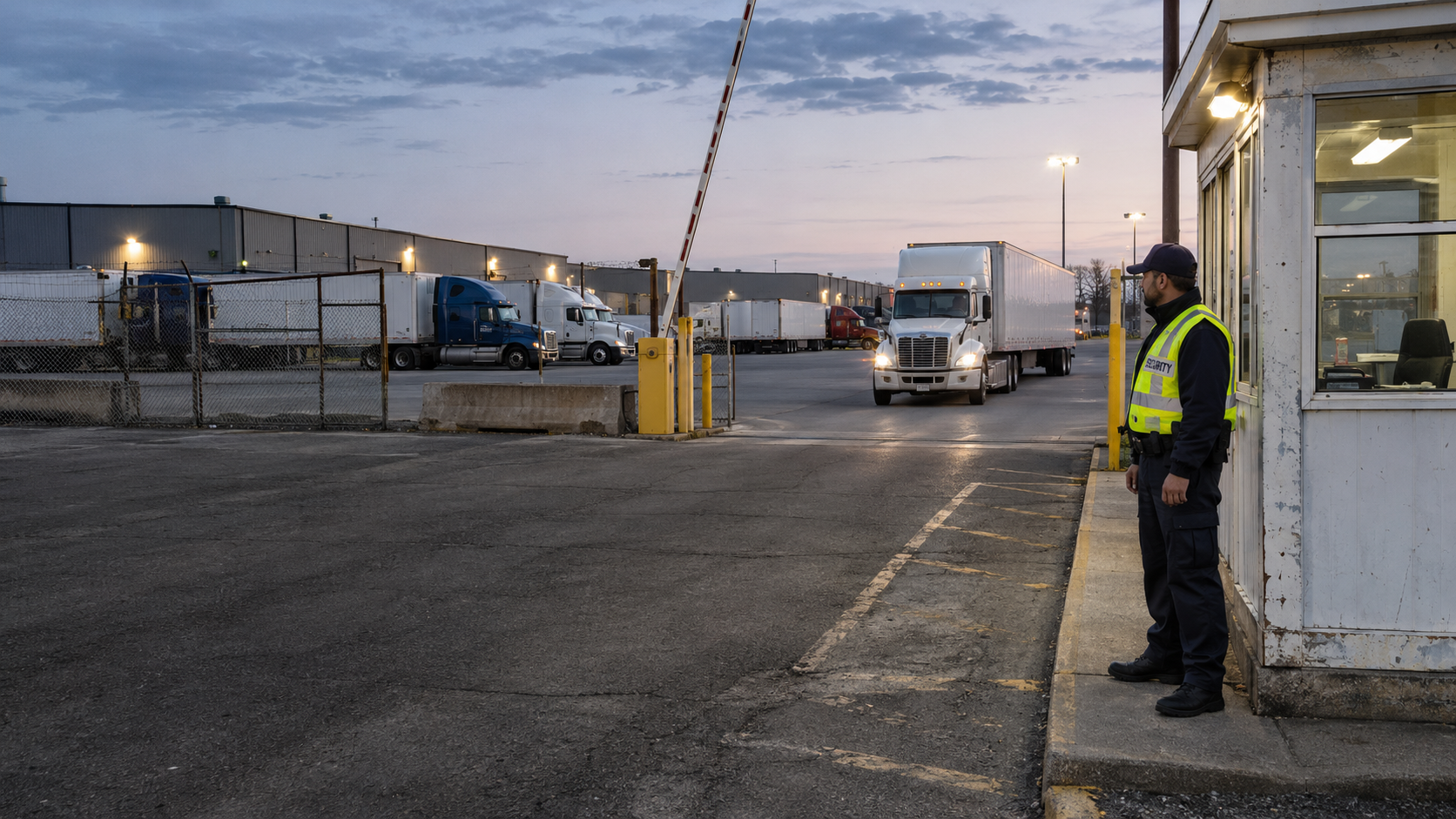
A truck yard needs to stay accessible to the right people while keeping unauthorized activity out. Drivers arrive outside office hours. Trailers change positions. Contractors need access, and dispatch needs answers without another delay at the gate.
Odin Protection provides Truck Yard Security Services in Toronto, including gatehouse security, static guards, mobile patrols, CCTV monitoring and alarm response. We build the scope around your property, operating hours and instructions, so security supports the way your yard actually works.
Whether you need closer oversight of parked equipment or a clearer process for vehicle access, start with a review of your current setup. Discuss overnight or 24/7 guard and patrol requirements with our team; schedules, staffing and monitoring arrangements are confirmed for each assignment.
Request a Truck Yard Security Quote to discuss your location and coverage needs.
How Does Truck Yard Security Manage Arrivals, Departures and Shift Changes?
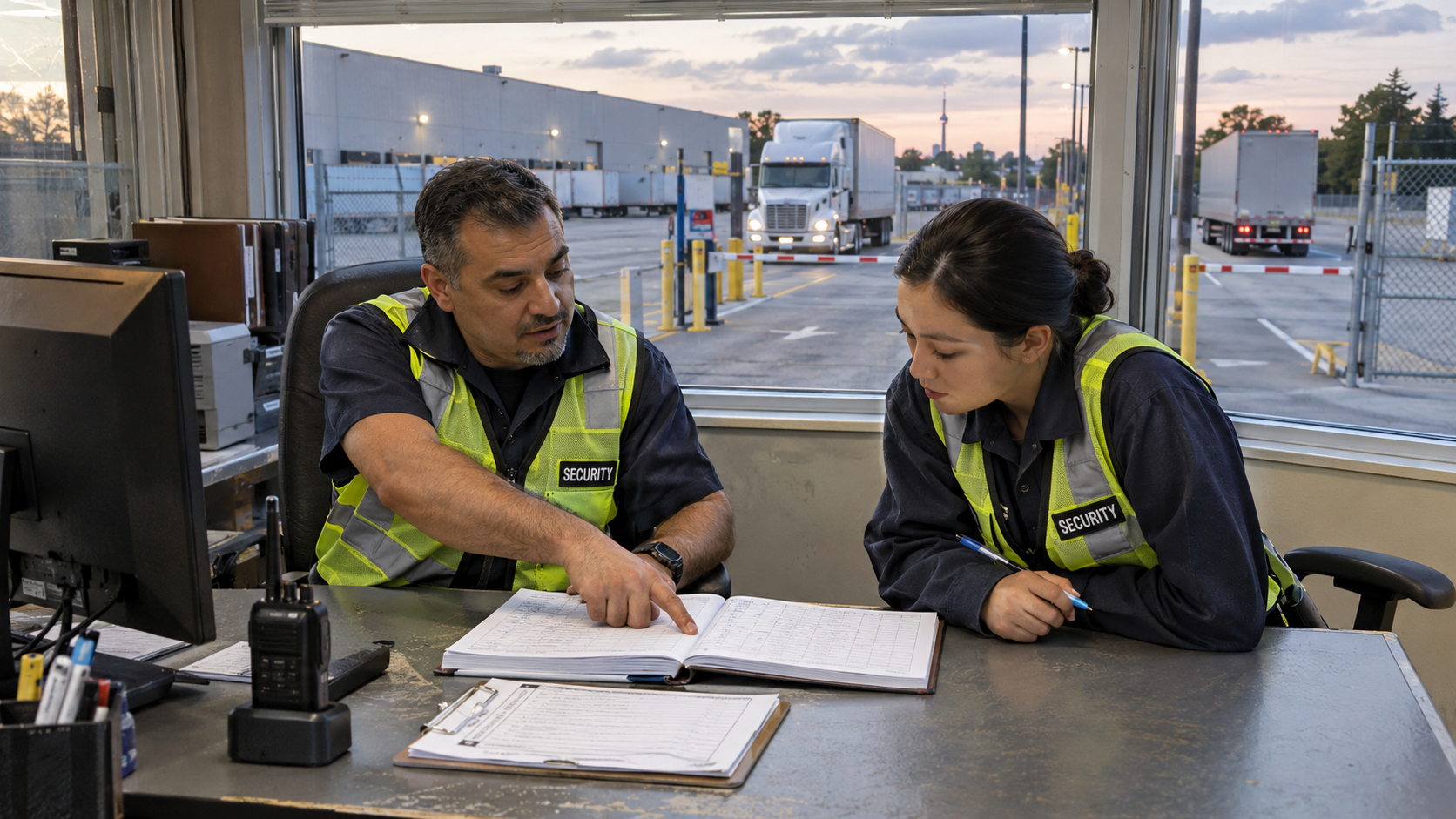
Commercial truck lot protection involves more than checking whether a gate is closed. A familiar carrier may send a different driver. A late pickup may arrive without the expected reference. A trailer may appear on the yard list but sit in a different row after an internal move.
When instructions are unclear, guards and dispatchers can lose time resolving routine exceptions. When checks are rushed, questionable movements can receive too little attention. The practical answer is a consistent access process, supported by patrols, observation and clear escalation contacts.
Your security plan should answer four everyday questions: who can enter, what can leave, who approves an exception and what happens when nobody answers. Those decisions help prevent unauthorized yard access while giving legitimate drivers a predictable experience.
Tell us where your current process breaks down. Repeated gate calls, unexplained equipment discrepancies and unmonitored entrances are useful starting points for a focused consultation.
How Does Gatehouse Security Support Truck Yard Dispatch Operations?
Establish a consistent arrival and departure routine
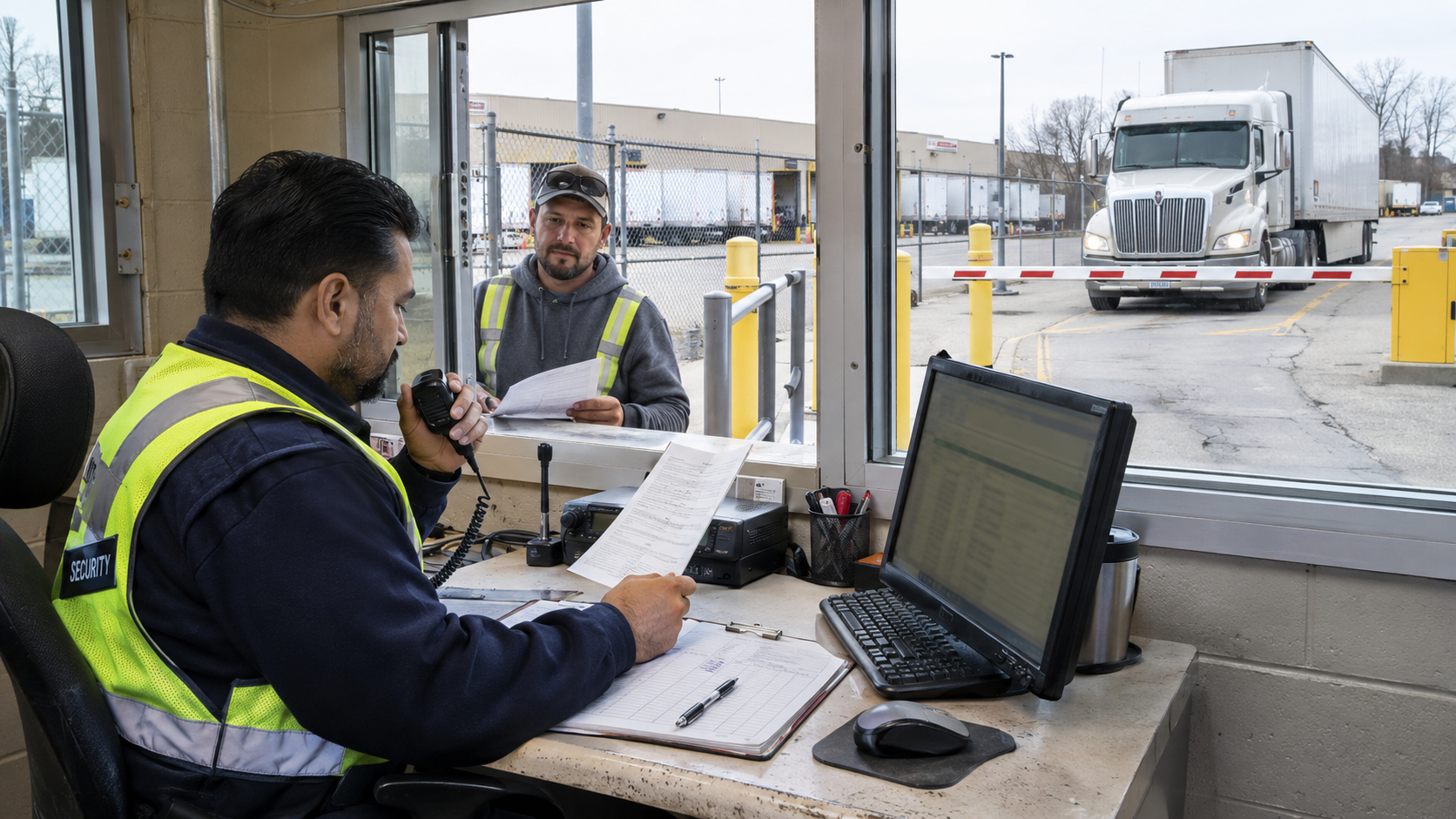
Odin provides gatehouse security and access control for truck yards. A defined gatehouse post gives drivers a clear point of contact and helps keep access decisions consistent across shifts.
When scoping dedicated yard check-in guards, agree on the information needed for each movement. Driver check-in and check-out logs may include arrival time, carrier, vehicle identification, trailer reference, destination within the property and departure authorization. The exact fields, recording method and responsibilities should be confirmed before service begins.
Keep the process proportionate. A returning employee, first-time contractor and unfamiliar driver collecting a loaded trailer may require different checks. Written instructions help guards distinguish routine access from an exception that needs management approval.
Resolve mismatches without leaving guards to guess
Bill of lading (BOL) verification can be discussed as a site-specific duty. Confirm whether guards would compare reference numbers against an approved list, contact dispatch or use a designated system. Document checks support your release procedure; they do not independently authenticate ownership or replace your shipping team’s authority.
For example, if the trailer number matches but the pickup reference differs, instructions should identify the person authorized to approve the movement. They should also explain where the vehicle can wait safely while the discrepancy is reviewed.
Visitor and contractor screening requirements deserve the same attention. Define permitted work areas, host contacts, escort requirements and departure recording. Ask Odin to review these proposed duties when preparing your gatehouse scope.
How Do On-Site Guards and Patrols Protect Trailers, Fleets and Equipment?
Give parked assets a visible security presence
Odin’s truck yard services include static guards, foot patrols, customized patrol routes, truck and equipment counts, safety checks and mobile supervision. These services support observation across areas that a gatehouse alone may not see.
For operators comparing fleet yard security guards in Toronto, the important question is what the guard will actually cover. A busy entrance and a large parking area may create competing responsibilities. Assigning both to one person requires a realistic review of distances, vehicle movements and periods when the gate needs continuous attention.
Patrol instructions should identify priority areas without making every round a mechanical exercise. Changes in parked equipment, damaged access points or activity outside an expected work area can warrant closer attention and reporting.
Make perimeter checks useful
Perimeter fence line checks can be included in the agreed patrol plan. Identify gates, pedestrian entrances, loading areas and sections where parked trailers obstruct views. The objective is to notice and report conditions that weaken the property’s access controls.
Warehouse perimeter security also needs coordination with the building team. A yard gate may be controlled while a side entrance remains propped open. A damaged light may reduce visibility near an otherwise secure fence. Patrol observations help management prioritize these maintenance issues.
For heavy equipment and fleet storage security, share the asset locations and movement rules that matter most. Equipment counts are more useful when guards know which changes are authorized and which require a call to your supervisor.
What Are the Security Options for Overnight Truck Parking ?
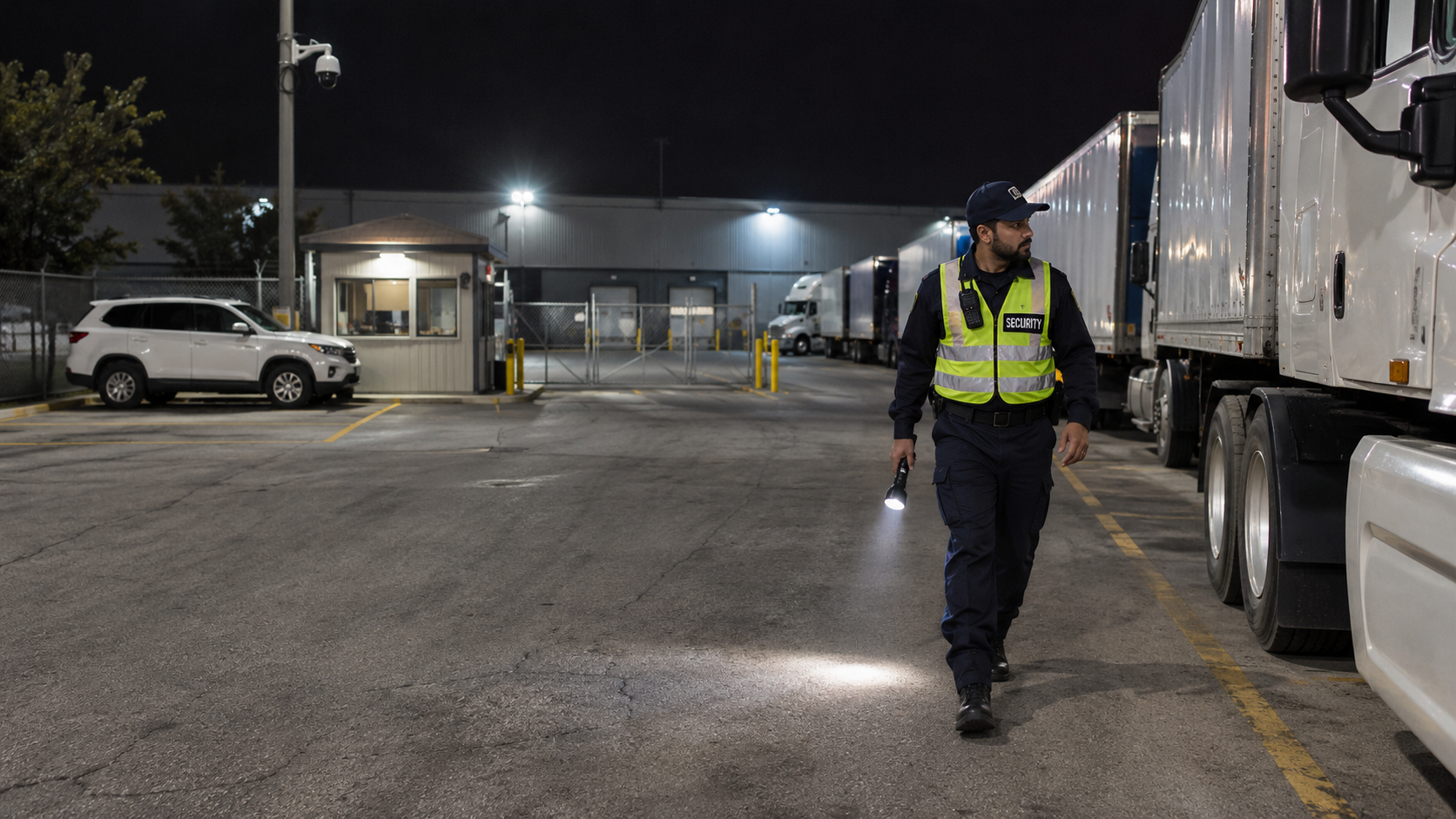
Odin offers mobile patrol services for truck yards. Patrols provide a visiting security presence and observations during agreed checks. They do not provide continuous observation between visits. An on-site guard can offer a more consistent presence, but the effectiveness of any assignment still depends on its duties, layout and supporting systems.
If you are looking for 24/7 mobile security patrol coverage in the GTA, share your address, required hours and expected patrol scope. Ask for confirmation of availability, visit arrangements and escalation procedures rather than assuming a general service description establishes coverage at your site.
Weekend closures, holiday shutdowns and overflow parking may change the plan. Explain whether drivers retain access during those periods and who can authorize a vehicle movement when the regular office is closed.
Discuss Overnight Yard Coverage with Odin before selecting a guard or patrol arrangement.
How Does Trailer Yard Surveillance and Monitoring Work?
Connect camera coverage to a practical purpose
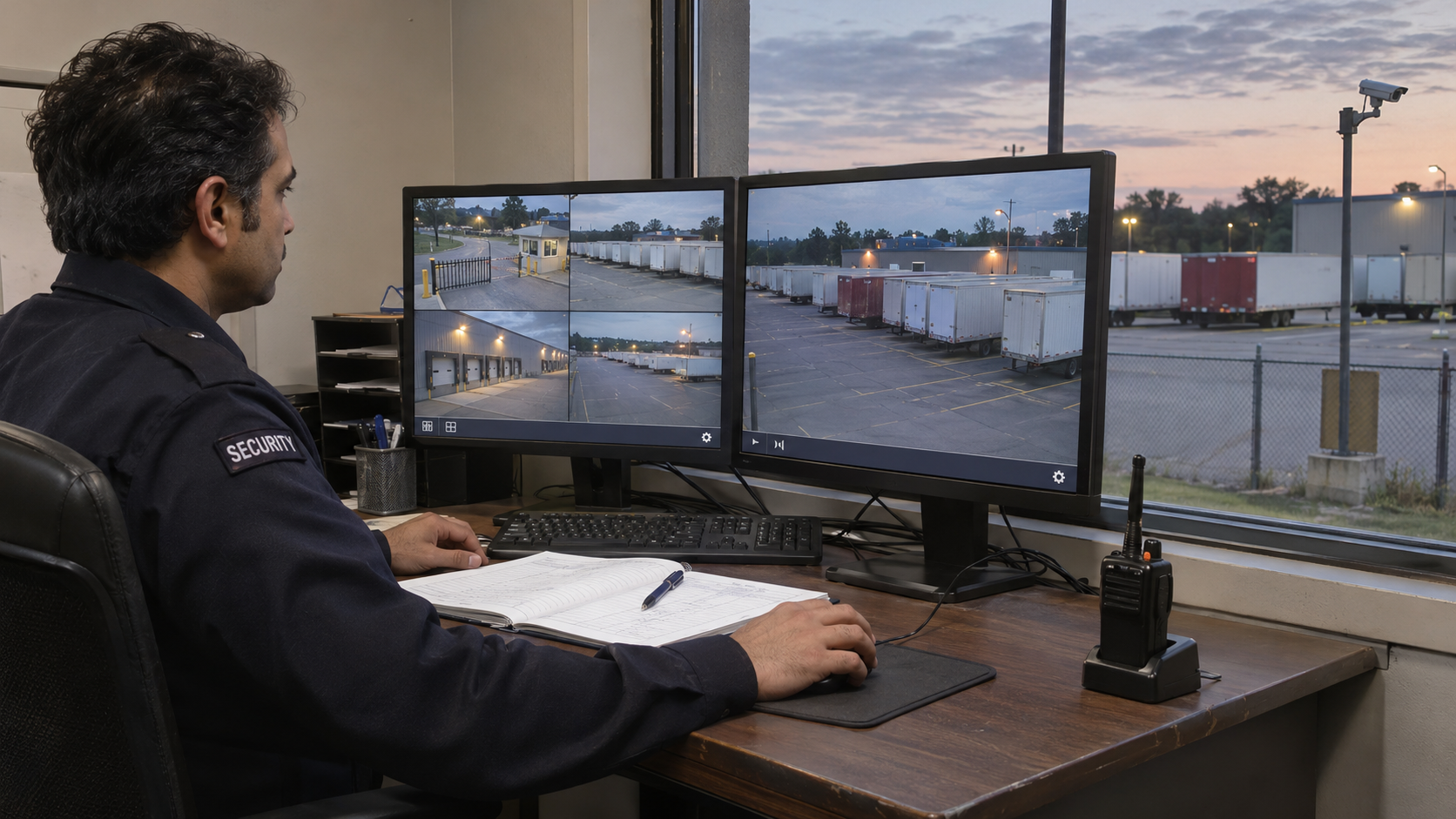
Odin provides CCTV monitoring and surveillance equipment services. For a truck yard, camera planning should begin with the areas you need to observe: entrances, trailer rows, loading zones or equipment storage.
A camera that shows a broad overview may not provide the detail needed to review a particular vehicle movement. Parked trailers can block views, and conditions after dark may differ from those during a daytime walkthrough. Discuss the intended use of each view and any equipment assessment needed.
On-site trailer yard surveillance works best when monitoring responsibilities are clear. Recording footage, watching a feed and receiving alerts are different activities. Confirm who performs each task, during which hours and under what escalation instructions.
Confirm specialized systems before including them
Odin’s monitoring page lists licence-plate-reading camera equipment and digital patrol-point scanning systems. Their suitability for your property, integration requirements and available reporting functions still need confirmation.
License plate recognition (LPR) systems can support vehicle identification when properly specified, but a plate match alone should not authorize trailer release. Lighting, viewing angles and operational checks remain relevant.
Ask about electronic guard tour reporting if you need checkpoint records or digital patrol evidence. Confirm what the system records, how exceptions appear and how your team receives reports. Patrol-point equipment does not automatically establish a complete reporting platform.
Live remote video monitoring should likewise be scoped explicitly. Confirm supported cameras, observation or alert arrangements, operating hours, communications and response responsibilities. Bring your existing system details to the consultation so proposed monitoring can be assessed realistically.
How Do Coordinated Controls Reduce Cargo, Fuel, and Vehicle Risks?
Cargo theft prevention starts with authorized movement
Cargo theft prevention in Toronto yards depends partly on knowing whether a pickup is expected and properly approved. A visible security presence helps deter suspicious activity; a consistent release procedure helps address uncertainty at the exit.
For high-value freight protection, discuss restricted parking areas, approved contact lists and additional checks for unusual movements. Keep sensitive load information accessible only to those who need it for their duties.
Trailer seal inspection and tracking can be considered as an additional procedure, subject to confirmation. Agree on who records seal references, what a discrepancy means and who decides the next step. A visible seal check cannot establish the condition or contents of a load, and guards should not break or replace seals without an authorized procedure.
Address fuel siphoning and component theft realistically
If you want to stop diesel fuel siphoning, start by identifying where vehicles sit, who can approach them and when activity around fuel areas would be unusual. Patrol observation, access control and suitable lighting can help reduce opportunities; no service can promise theft will stop.
Catalytic converter theft protection should reflect the vehicles and equipment actually stored on your property. Discuss accessible parking areas, lighting gaps and signs of interference with your fleet manager. Guards can observe and report concerns within their assignment; mechanical inspection remains a separate responsibility.
Deter trespassing and vehicle interference
Commercial vehicle vandalism prevention benefits from attention to unauthorized visitors, isolated parking rows and damaged barriers. Clear reporting enables your team to respond to a concern before it becomes a recurring blind spot.
A coordinated plan can help deter trailer hijacking and trespassing through controlled access, visible observation and escalation. It cannot eliminate every risk. Set realistic expectations about what guards can see, what cameras cover and who takes responsibility when suspicious activity is reported.
Our Security Planning For Different Logistics Facilities
Distribution centres and cross-dock operations
Logistics and distribution center security must account for frequent arrivals, changing schedules and access to the warehouse itself. The handoff between gatehouse, dispatch and dock teams deserves particular attention.
If you need cross-dock facility guards, discuss whether their proposed role involves access control, patrols, observation of staging areas or a combination. Confirm staffing against traffic peaks so one duty does not silently leave another unattended.
Trailer parking lots and storage yards
Tractor-trailer parking lot security often centres on access permissions and equipment accountability. Identify who rents or uses each area, how movements are approved and how exceptions are recorded.
A useful parking plan distinguishes employee vehicles, visiting tractors, loaded trailers and stored equipment. That helps make unexpected activity easier to recognize and reduces confusion when management reviews a reported discrepancy.
Freight terminals and container yards
When selecting a freight terminal security company, explain the handoffs between your yard and other carriers or facilities. Different parties may control documentation, loading and release decisions.
Intermodal container yard protection may require procedures beyond a standard truck parking assignment. Share container identification needs, access restrictions and any customer requirements for review. Specialized duties must be agreed before they are described as part of Odin’s service. Effective supply chain security solutions define responsibilities across those handoffs rather than leaving ownership of a decision unclear.
Where Can You Get Yard Security Consultations in Toronto and GTA?
Highway 401 corridor freight security planning should consider the way vehicles actually enter your property. A yard close to a major route may still have a narrow approach, shared driveway or limited space for waiting vehicles. Explain these constraints during your consultation.
Include nearby overflow lots or separate storage compounds in your request. They may need their own access instructions, patrol arrangements or reporting responsibilities even when one manager oversees the entire operation.
How Does Odin Protection Plan Your Truck Yard Security?

1. Share the operational picture
Start with your address, yard layout, operating hours, gate locations and approximate vehicle activity. Explain the problem you want to solve: overnight access, unclear release checks, missing equipment records or insufficient observation. You do not need a finished specification to begin the conversation.
2. Review the property and existing controls
Odin describes a property review and site-specific approach for truck yards. Use that review to discuss fencing, lighting, camera views, gate arrangements and current staff responsibilities. Identify which problems require security duties and which need maintenance, equipment changes or management decisions.
3. Agree on duties, coverage and authority
Document guard posts, patrol expectations, monitoring scope and hours. Confirm who can approve access, release equipment and resolve discrepancies. Include arrangements for breaks and handovers where they affect coverage. Review proposed BOL checks, seal records or technology integrations as separate scope items requiring confirmation.
4. Prepare site instructions and escalation contacts
Site-specific training is part of Odin’s published truck yard approach. Instructions should explain routine activity, restricted areas, emergency contacts and exceptions. Provide a clear fallback when the first contact is unavailable. Guards need an approved process rather than an assumption that somebody will answer.
5. Review reports and adjust the plan
Odin lists site activity update reports among its truck yard services. Agree on their format, delivery and urgent notification rules. Use recurring observations to improve the assignment: repeated gate delays may indicate unclear instructions, while recurring lighting faults may need property maintenance. Confirm changes in writing as operations evolve.
How Are Truck Yard Incidents Reported and Alarms Handled?
A useful incident record identifies what was observed, where and when it happened, who was notified and what action followed. Equipment references and relevant camera locations can help your team investigate, provided those details are available and included in the reporting scope.
Alarm monitoring and response are listed Odin services. If rapid alarm response in Toronto is a procurement priority, request details for your address, including notification procedures, access arrangements and how attendance is coordinated. Response times depend on circumstances and must not be assumed from a service label.
Define urgent events separately from routine updates. An unexplained equipment movement, damaged fence and failed light may require different handling. Management should know which concerns trigger immediate contact and which appear in the next report.
Request a Security Plan For Your Truck Yard
Your yard needs clear access decisions, useful observations and a process your dispatch team can work with. Start by explaining where you need more control and what coverage your operation requires.
Share your Toronto or GTA property address, hours and priorities to discuss a suitable scope with Odin Protection.
Frequently asked questions
Can Odin provide 24/7 truck yard security in Toronto?
Odin lists truck yard guards, mobile patrols, monitoring, alarm response and 24/7 client care. Discuss continuous guard coverage or overnight schedules directly with the team. Availability, staffing, patrol arrangements and monitoring hours must be confirmed for your property. A 24/7 client care service does not itself establish a continuously staffed guard post. Provide your required start date and hours so the quote can identify the actual coverage proposed.
Should I choose on-site guards, mobile patrols or cameras?
Choose according to the tasks that need attention. A yard with constant arrivals may need a staffed access point; a quieter storage lot may benefit from scheduled patrols and supporting cameras. Cameras provide visibility within their coverage, while guards can perform assigned access and observation duties. Patrol visits leave intervals between checks. Discuss these differences with Odin and request a scope showing who handles each task and when.
Can guards check BOL documents and trailer seals?
These are options to confirm for your assignment. Agree on the documents or references to compare, who supplies approved information and how mismatches are escalated. Trailer seal inspection and tracking also require defined recording and authorization procedures. Guards should not independently resolve shipping discrepancies or treat a matching seal as proof of cargo integrity. Supply your existing dispatch process so the proposed checks fit your release authority.
Does Odin offer LPR and electronic reporting systems?
Odin’s monitoring page lists licence-plate-reading camera equipment and digital patrol-point scanning systems. Ask which equipment and functions are suitable for your yard. Integrated LPR access decisions, electronic guard tour reporting, dashboards and yard-management connections require separate confirmation. Explain the outcome you need, such as reviewing arrivals or checking completed patrol points, so the discussion starts with a practical requirement rather than an assumed technology package.
Are licensing, insurance, bonding and WSIB status verified?
Odin’s website describes its business and truck yard guards as licensed. For procurement, request current evidence of the relevant business and individual licences before appointment. If your specification calls for PSISA licensed security guards in Ontario, a bonded and insured security company in Toronto, or WSIB compliant security officers, request the applicable documentation and review its scope and validity. Current insurance, bonding and WSIB status are not established by this page.
Can security guarantee that cargo or fuel theft will stop?
No. Guards, patrols, monitoring and access procedures can support deterrence, earlier recognition and more consistent reporting, but they cannot eliminate every opportunity for theft. Results depend on property conditions, the agreed coverage and the way procedures are followed. Discuss known concerns openly, including damaged barriers or unclear release authority, so the plan addresses operational weaknesses rather than relying on a promise of complete protection.
What determines the cost of truck yard security?
The proposed staffing, coverage hours, property layout, access activity, patrol duties and monitoring requirements all shape the service scope and quote. Specialized documentation checks or technology work may need separate assessment. Share your priorities and ask what each quoted item includes. Comparing defined duties and coverage makes proposals easier to assess than comparing an hourly figure without understanding the responsibility assigned to that post.
What information should I provide to request a quote?
Send the address, operating hours, required coverage period, gate arrangements and a summary of your main concerns. Include existing cameras, alarms, guard procedures and any planned BOL or seal checks. Mention overflow areas and requirements for licensing or procurement documents. If you need a near-term start, state the requested date so Odin can confirm feasibility. Avoid sending sensitive cargo details through a general inquiry unless needed and appropriately arranged.